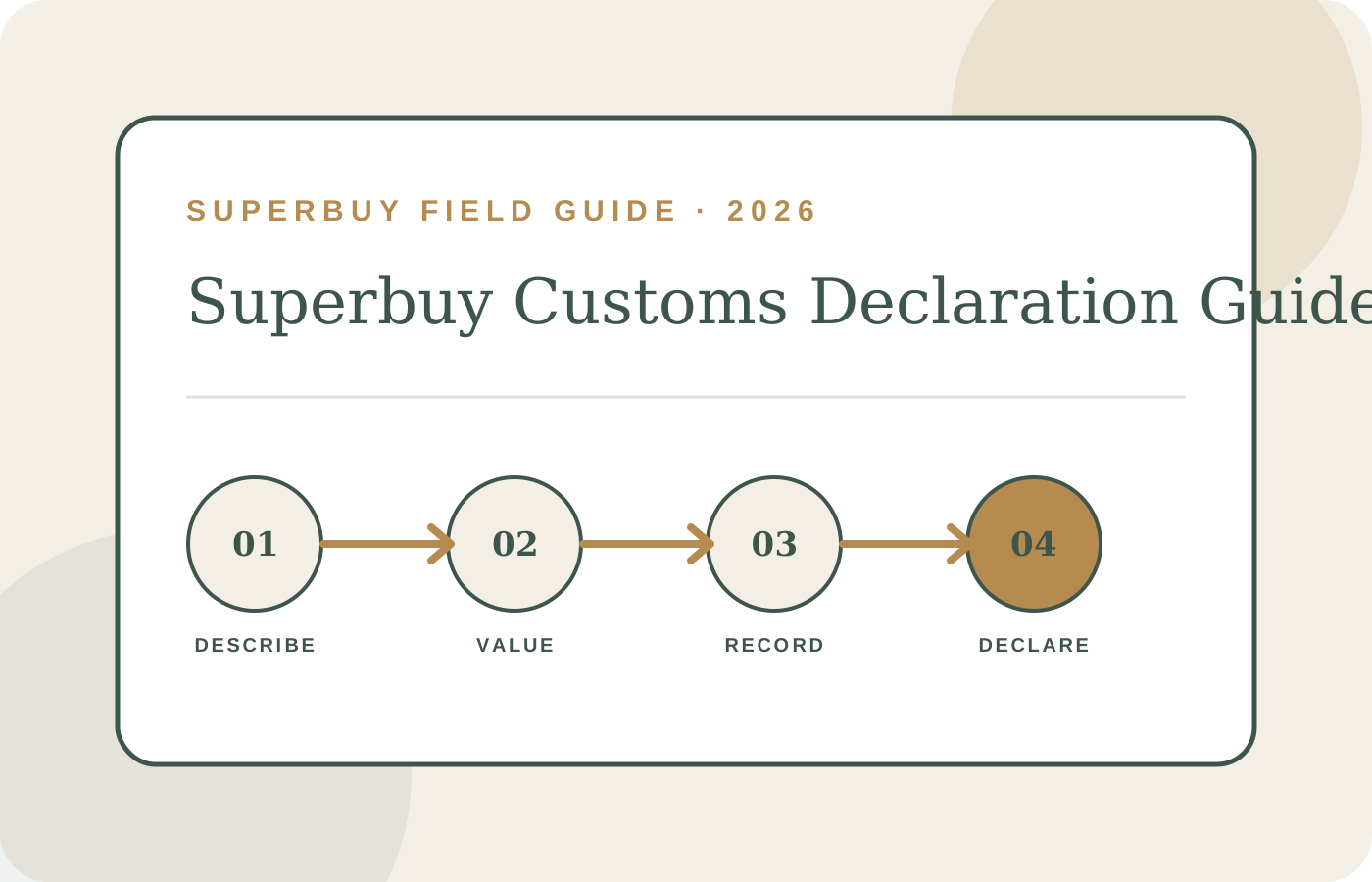
Treat the declaration as a parcel identity
A customs form connects the physical box with a description, quantity, value, origin and recipient. Its purpose is not to predict whether an officer will inspect the parcel; it is to give authorities and carriers usable information. Begin with the actual contents selected from the warehouse. Group similar ordinary items where the form permits, but do not hide a battery, liquid, food item or other sensitive product inside a vague category. The description should make sense to someone who has never seen the marketplace listing.
Consistency is the first risk check. The item count, descriptions and values should align with the warehouse parcel, purchase record and payment evidence. If a form says “two shirts” while the X-ray or invoice shows shoes, electronics and cosmetics, the problem is not a missing magic phrase; it is contradictory information. Build the declaration after deciding the final parcel contents, not while products are still being added or removed.
Use plain descriptions instead of coded language
Write ordinary commercial descriptions such as cotton T-shirt, leather belt, plastic phone case or sports shoes. Add material or purpose when it helps classify the item, but avoid marketing slogans and marketplace abbreviations. “Accessories” is often too broad to explain a watch strap, charging cable or sunglasses. “Gift,” “sample” or “personal item” describes a transaction status rather than the object and should not replace the actual product name.
Do not rename a restricted product as something harmless. Carriers and customs authorities can inspect the parcel, and inaccurate descriptions can cause rejection, delay, seizure or loss of compensation. Route eligibility should be solved before submission by checking the warehouse classification and available lines. A truthful description protects the connection between the declared item and any later damage or loss claim.
Declare value from evidence, not forum formulas
Use a reasonable transaction value supported by the order record. The relevant evidence can include product price, quantity, discounts and payment confirmation. Do not copy a fixed amount per kilogram from a forum because weight is not value: a kilogram of inexpensive clothing and a kilogram of electronics do not have the same transaction price. Arbitrary undervaluation can attract scrutiny and can also reduce the amount you can substantiate if a parcel is lost.
If a discount or bundled price changed what you paid, preserve the record showing that change. Keep values internally consistent across the item lines and total. Currency conversion should be handled with the form and route instructions displayed at submission. When uncertain, ask Superbuy which field or document the route requires, while remembering that only the destination authority can make the final customs decision.
Understand tax-included and duty-managed labels carefully
Some shipping lines are described with tax-included, duty-managed or similar language. Those labels refer to the logistics arrangement offered for an eligible parcel; they do not turn prohibited goods into acceptable goods and do not authorize a false declaration. Read the current route details for destination coverage, maximum value, accepted categories and any special declaration instructions. Similar-sounding routes can have different terms.
Do not assume that selecting such a line ends every recipient obligation. Customs laws, carrier fees and route arrangements can change, and authorities can request information. Keep a separate allowance for unexpected charges unless the current written terms clearly cover them. The safest interpretation is operational: follow the route's documented process accurately, preserve records and remain reachable if the carrier asks for clarification.
Split parcels for compliance, not folklore
Parcel splitting can be useful when one restricted item removes every practical line for ordinary goods, when a size limit is exceeded or when fragile goods need different packaging. It should not be used as a scheme to conceal contents or create misleading declarations. Compare the complete cost and risk of each proposed parcel, including repeated first-weight charges, insurance and tracking.
Group items with compatible classifications and protection needs. Clothing may travel efficiently together, while a battery product or liquid may need a dedicated eligible line. A large shoe box can create dimensional weight for otherwise compact garments. Write down why each split exists. A clear operational reason helps you avoid random changes driven by a single cheap quote or an old community rule.
Keep a customs evidence folder before dispatch
Save the original product pages or screenshots, order prices, quantities, payment records, warehouse photos, parcel contents, declaration and selected route terms. Use filenames that include the order or parcel number. If an authority or carrier asks for evidence, a consistent folder is faster and more credible than reconstructing the transaction from chat messages after the fact.
Protect personal and payment information when sharing documents. Provide only what the legitimate carrier, authority or Superbuy support channel requests through a verified route. A request to send passwords, one-time codes or unrelated identity documents through an informal account is not normal evidence collection. Confirm the requesting party and purpose before transmitting sensitive records.
Respond to a customs hold with the right question
Tracking words such as “customs,” “clearance” or “inspection” do not all mean the same outcome. Determine whether the parcel is awaiting routine processing, recipient documentation, tax payment, physical inspection or return instructions. Check messages from the carrier and the contact details attached to the parcel. A silent tracking line may simply be between scans, while a formal document request requires timely action.
When asking for help, provide the parcel number, destination, route, last physical scan, date and any notice received. Do not submit several different values or descriptions in separate conversations. If a correction is genuinely required, ask for the documented process and keep the response. Consistency does not mean repeating an error; it means making any necessary correction transparently rather than inventing a new story.
Review the delivered parcel and improve the next one
Keep the declaration and customs records until the parcel is delivered and any claim or return period has ended. If the carton arrives with customs tape or has been repacked, photograph it before opening. Compare the contents with the warehouse list and note any missing or damaged item. A customs inspection does not automatically explain damage, so preserve the physical evidence needed to separate inspection handling from carrier damage.
After delivery, record whether documents were requested, whether tax or fees were charged, how long clearance took and which description format you used. This history helps plan later parcels to the same country, but it is not a permanent rule. Always recheck current route instructions and destination requirements. A good declaration process is deliberately boring: accurate goods, supportable values, consistent records and no dependence on tricks.
Recheck the destination rules for every new parcel
Customs thresholds, low-value relief, prohibited-item lists and documentation procedures can change without making an old shipping guide visibly wrong. A parcel that cleared last year is evidence of one past transaction, not advance approval for the next box. Before submission, review the current destination-country guidance and the exact route description shown in your account. Pay particular attention when the parcel contains food, supplements, cosmetics, batteries, animal materials or several identical items that could appear commercial rather than personal.
If current rules are unclear, reduce uncertainty through official written guidance or the carrier's documented support channel rather than relying on a social-media declaration chart. Keep the date and source of the guidance with the parcel record. This step will not guarantee release, because customs authorities retain discretion, but it prevents an avoidable mismatch between an outdated assumption and the form you sign today. The reliable habit is to verify, declare consistently and budget for the lawful outcome.
Questions readers ask before committing
What value should I declare? +
Use a reasonable value supported by the actual order and payment record. A copied value-per-kilogram formula is not evidence of the transaction.
Can I label the parcel as a gift? +
Only when that accurately describes the transaction and the form permits it. “Gift” should never replace truthful descriptions of the actual goods.
Does a tax-included route remove customs risk? +
No. Follow the route terms, restrictions and declaration instructions. Authorities can still inspect parcels or request supporting information.
Should restricted goods be hidden in a clothing parcel? +
No. Check the warehouse classification and use an eligible route or a compliant split. Misdescription creates safety, customs and compensation risk.
Which documents should I save? +
Keep product and order records, payments, QC photos, final parcel contents, declaration, route terms, tracking and any carrier or customs notices.
What should I do if customs asks for information? +
Verify the request, respond within the stated period with consistent evidence, redact unnecessary sensitive data and keep copies of every submission.
Written from current public Superbuy shopping, warehouse, fee, freight and help information checked on September 20, 2026. Service availability, route rules and destination requirements can change; confirm the live account screen before paying.