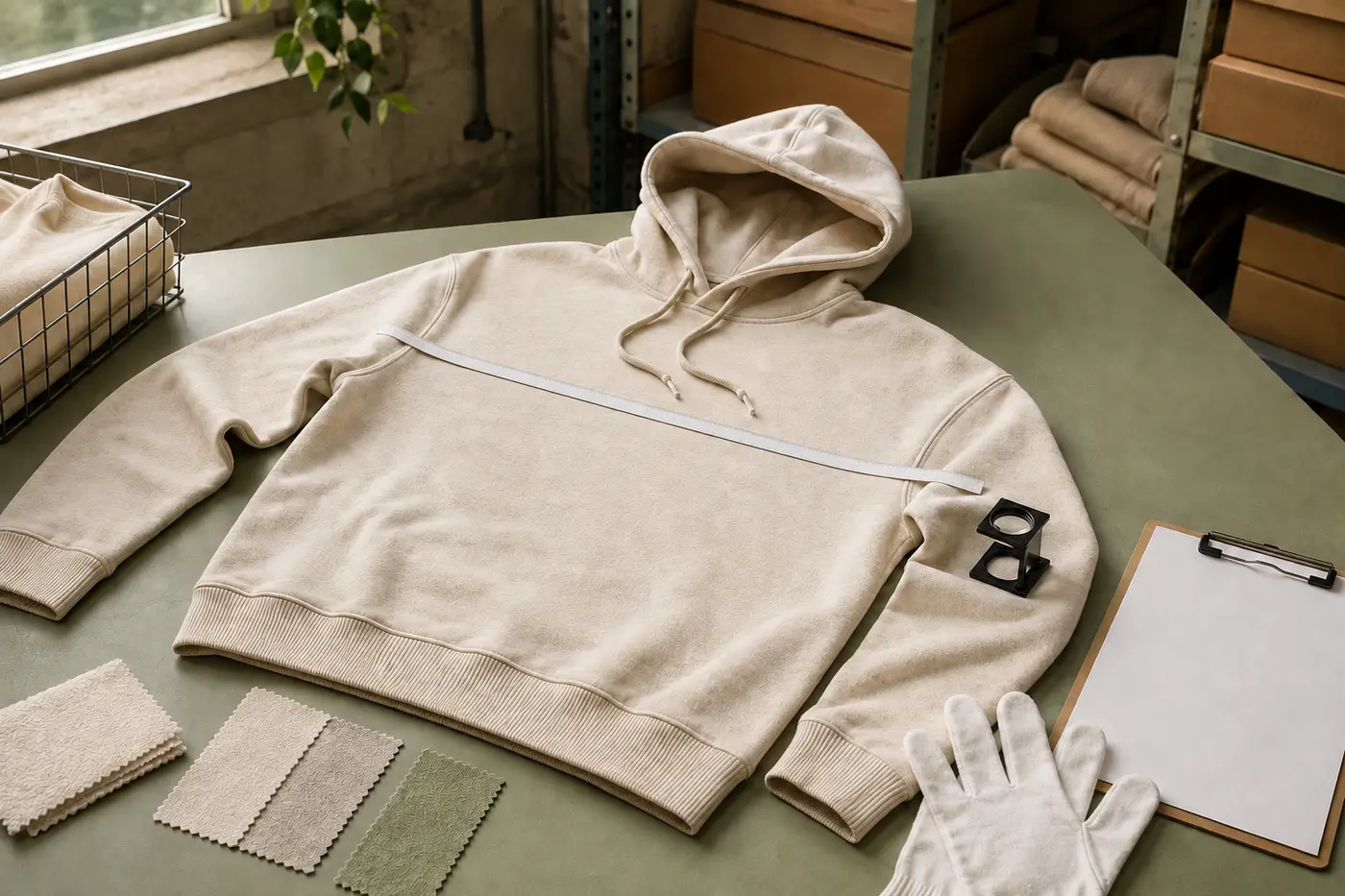
Treat QC as a gate, not a decoration
Superbuy's current homepage states that three free QC photos are taken during warehouse inspection for ordinary eligible items. Those images sit at the most useful point in the buying journey: the seller has delivered the physical unit, but you have not yet paid to move it internationally. The purpose is not to admire the purchase. It is to decide whether the visible evidence supports one of three actions—ship, request clarification, or pursue an after-sales solution while the item is still in China.
Standard QC has a defined ceiling. Photographs can show the wrong colour, obvious damage, quantity, printed size and many construction details. They cannot authenticate a product, verify fibre composition, prove internal electronics performance or predict long-term durability. Superbuy's forwarding guidance also distinguishes basic confirmation from professional product inspection. Good buyers do not ask a photograph to answer a chemical or mechanical question; they identify what is visible, then buy a targeted service when a higher-risk item needs another kind of evidence.
Layer one: reconcile the received item with the order
Begin with order identity before examining craftsmanship. Match the selected colour, model, size option, quantity and included pieces against the warehouse record. For patterned items, check that the photographed version corresponds to the chosen option rather than a similar thumbnail. For sets, count visible components and note anything hidden by packaging. A beautifully made item is still wrong if it is not the configuration you paid for, and an incorrect option is usually easier to explain with a simple order-to-photo comparison.
Use all three standard frames together. Warehouse lighting, camera white balance and your display can shift colour, so one warm photograph should not trigger a conclusion by itself. Compare neutral surfaces in the scene and look for consistent differences across angles. If colour is commercially or personally critical, request a neutral-light close view with the whole affected panel visible. Describe the selected option in your request; ‘colour looks wrong’ is weaker than ‘please photograph the olive body beside the order's colour label under neutral light.’
Layer two: read silhouette and proportion before details
Stand back from the zoom button. The full-item frame reveals proportion errors that close-ups hide: unequal shoe shapes, a twisted garment body, an off-centre pocket, a tilted graphic, mismatched bag handles or an uneven hem. Compare left and right sides, then follow major horizontal and vertical lines. On clothing, inspect shoulder slope, sleeve balance and body length. On footwear, compare toe shape, heel height and the alignment of panels on both shoes rather than judging one attractive side.
Creases are not automatically defects. Soft goods can compress during domestic delivery and may relax after unpacking, while stains, abrasion, holes, glue residue and permanent distortion require a closer look. Distinguish packaging pressure from construction failure by asking whether the mark follows a fold or interrupts the material surface. If the standard image is too distant, request one straight-on full view before purchasing several tiny close-ups. Context makes a detail interpretable; without it, you may not know where the photographed flaw sits on the item.
Layer three: inspect construction where stress accumulates
Construction quality is easiest to assess at load-bearing points. Examine shoulder seams, pocket corners, cuffs, waistbands, zipper ends, bag-handle attachments, lace eyelets and the junction between a shoe upper and sole. Look for consistent stitch density, straight seams, secured thread ends and symmetrical assembly. A single loose surface thread can be minor; skipped stitches, open seams or repeated waviness near a stress point suggest a functional problem. Compare the same feature on both sides whenever the product is symmetrical.
Superbuy currently lists re-inspection at CN¥6 per order, including three photos and verification of style, quantity, colour, size, model, damage and obvious defects. Use it when the original set is contradictory or appears to document a broader problem. If the question concerns one exact location, the detailed-photo service is more efficient. The current fee table lists a personalised high-definition detail photo at CN¥2 per image, although an older example on the same official fee page still mentions CN¥3; the order screen should therefore be treated as final.
Layer four: turn sizing into a reproducible measurement
A seller size chart is a claim about a batch; a warehouse measurement is evidence about the unit received. For clothing, identify the dimensions that determine fit for that garment—chest width, shoulder width, body length, sleeve, waist, rise or inseam. For shoes, outsole or insole length often tells more than a regional size label. For bags, hats and accessories, physical dimensions prevent scale surprises that styled seller photographs can conceal. Compare these numbers with an item you already own and wear, not only with your body measurement.
Write measurement requests so another person can execute them without interpretation. Name both endpoints, ask that the item lie flat when appropriate, and require the tape numbers to remain visible in one frame. ‘Measure the hoodie’ is ambiguous; ‘measure chest width from pit seam to pit seam with the front flat’ is operational. One precise CN¥2 frame can prevent a costly international shipment, while three vague frames can leave the same uncertainty. Save the result beside the size option in your spreadsheet for future seller comparisons.
Layer five: separate surface evidence from material claims
QC photos can reveal weave, nap, grain, sheen, print edges, embroidery density and visible surface damage. They cannot confirm a fabric percentage or tell you how a coating will age. Use close views to compare consistency: does the texture change unexpectedly between panels, does embroidery pull the surrounding fabric, does screen printing crack at a fold, or does hardware finish vary between matching pieces? Natural-looking light is useful because aggressive reflections can disguise scratches and flatten texture.
For electronics, a photograph of the box or device exterior is not a function test. Superbuy's fee list currently offers a CN¥12 power-on inspection for 3C products and appliances, with a photo showing powered-on status. Even that check confirms a limited moment, not every feature, battery health or long-term reliability. Decide what failure would make the purchase unacceptable, then choose evidence proportional to the risk. A simple accessory may need only quantity and connector type; a higher-value device may justify power-on evidence and closer inspection of ports.
Layer six: finish with a written ship, hold or return record
After review, write one outcome. ‘Ship’ means the visible item matches the order and no unresolved issue exceeds your tolerance. ‘Hold’ means a named question remains and you have requested a specific photo, measurement or inspection. ‘After-sales’ means the evidence shows a material mismatch or defect and you are contacting the agent before the relevant return opportunity closes. Do not leave an item in a vague mental state while the warehouse clock continues; Superbuy lists 90 days of free storage, but seller after-sales windows can be much shorter.
Store the QC date, received option, measured values, visible issues, extra-service cost and final decision in your product record. That history reveals patterns no single photograph can show. You may learn that one clothing category consistently needs chest measurements, that glossy accessories require angle-specific scratch checks, or that a seller's colours regularly differ from listing images. QC then becomes a feedback system: every parcel improves the questions you ask before buying and the evidence you request before paying international freight.
Questions readers ask before committing
How many free Superbuy QC photos are provided? +
Superbuy currently advertises three free QC photos during warehouse inspection for ordinary eligible items. Some 1688 categories and special order types can follow different standards, so check the order record when the expected photos are absent.
How much is one extra detailed photo? +
The current value-added service table lists CN¥2 per detailed photo. Because an older example on the same official page still mentions CN¥3, rely on the price displayed in your order before payment.
Can QC photos prove authenticity? +
No. They document visible condition and attributes. They are not professional authentication, laboratory analysis or a guarantee of material composition, performance or durability.
What is the best first extra photo for clothing? +
Usually a fit-critical measurement or a straight-on view of a suspected defect. Name the exact endpoints or location so the image resolves a decision instead of adding another general angle.
When is re-inspection better than one detailed photo? +
Choose re-inspection when the standard set is incomplete, contradictory or suggests multiple basic problems involving option, quantity, damage or obvious defects. Use a detailed photo for one tightly defined question.
Can warehouse lighting make the colour look wrong? +
Yes. Camera white balance, lighting and your screen can shift colour. Compare every frame and request a neutral-light photo when exact colour is central to the decision.
Does a power-on photo prove an electronic item fully works? +
No. It shows that the device reached a powered-on state during the check. It does not test every function, battery condition or future reliability.
How should QC notes be stored? +
Record the review date, selected and received options, measurements, visible issues, paid checks and final action. Connect the notes to the exact product link and warehouse order.
Written from Superbuy public fee, freight, purchasing, warehouse and new-user information checked on August 21, 2026. Confirm current pricing and eligibility in your account before paying.