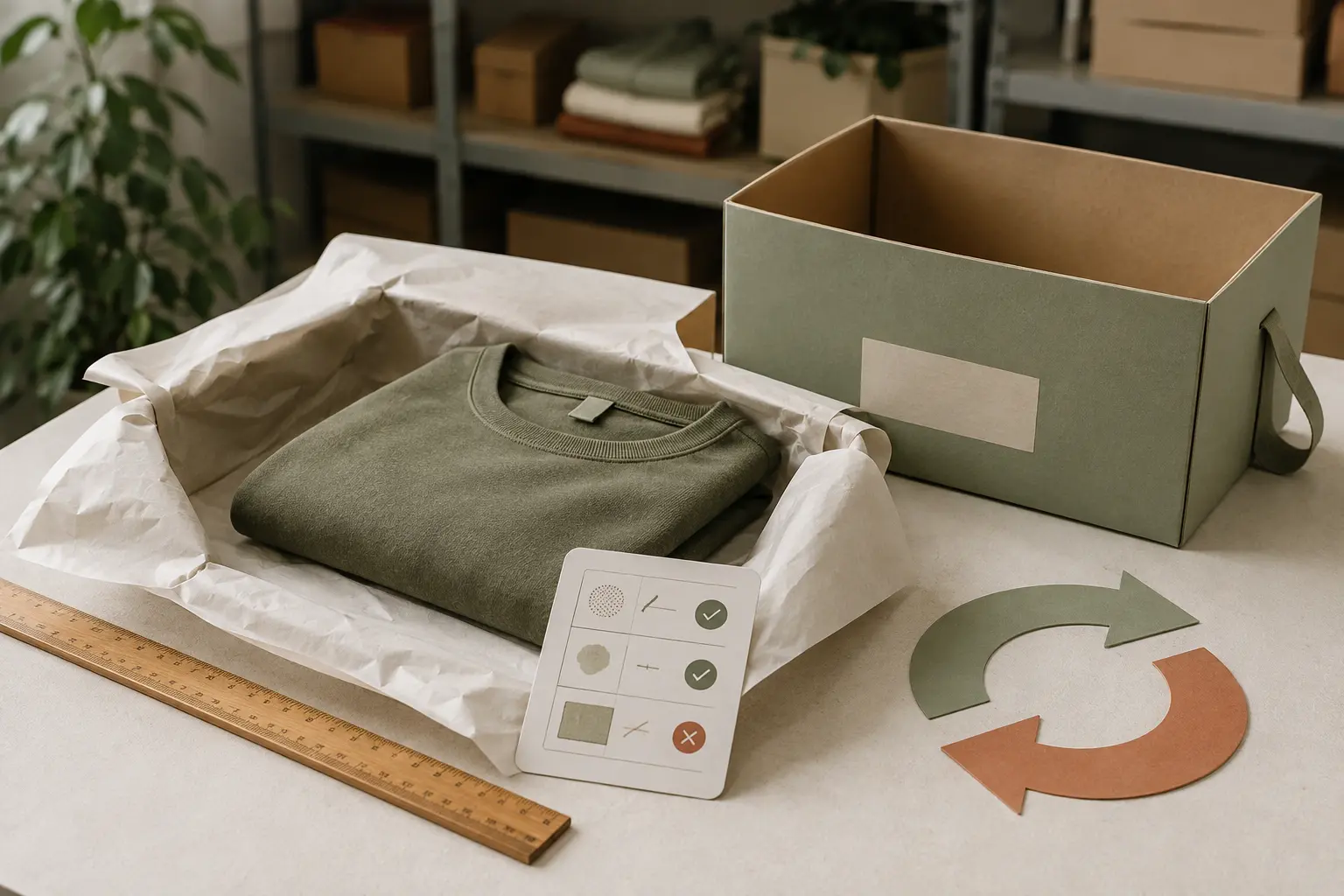
Treat warehouse arrival as a decision deadline
The least expensive Superbuy return usually begins before international shipping. Once an item is stored, you have a short period in which warehouse evidence, seller policy and domestic logistics can still be combined into a workable solution. If you submit the item in an overseas parcel first, a wrong size or visible defect becomes far harder to reverse. International postage, customs procedures and the seller’s original after-sales window do not pause while the parcel travels.
Build a “hold for review” rule into your spreadsheet. Do not place a newly stored item into a parcel until you have checked the ordered colour, size, model, quantity, obvious condition and any requirement that mattered when you bought it. Superbuy’s public guidance says stored shopping-agent items receive warehouse inspection and photos, and the platform may contact users when a problem is identified. That process is useful, but it is not a substitute for your own product-specific review.
Separate an objective mismatch from buyer preference
An objective mismatch is evidence that the delivered item does not correspond with the order: the seller sent size 42 instead of 44, the selected colour is wrong, a listed accessory is missing, or a visible crack appears in the warehouse photo. A preference problem is different. The item may match the listing, but you dislike the shade, fit expectation or material after seeing it. This distinction matters because the seller may accept responsibility for a documented mismatch while treating a preference return under a narrower no-reason policy.
Write the claim in neutral language. Record what was ordered, what the evidence shows and which listing detail creates the difference. Avoid broad statements such as “quality is bad” when the actual issue is a broken zipper, uneven printed alignment or a missing cable. Superbuy acts as a purchasing agent and helps communicate with the third-party seller; it does not manufacture the merchandise or control the seller’s final negotiation decision. A precise claim gives the agent something specific to present.
Build a compact evidence packet
Start with the Superbuy order number and the warehouse item record. Save the selected variant, quantity, paid product price, domestic shipping amount and the relevant seller description. Then review every standard warehouse image at full size. Mark the exact area that supports your claim, but keep an unedited copy as well. If the standard angles do not show the necessary fact, request a targeted detail photo or measurement before opening the case. One photograph of the size label is more persuasive than five general photos of the garment.
Your note should be short enough to translate without ambiguity: “Ordered black, size XL; warehouse label shows L. Please confirm whether the seller will exchange for XL and state domestic return postage.” For a defect, describe its location and scale. For a quantity problem, distinguish the number of seller parcels from the number of units inside them. Superbuy’s 1688 guidance warns that sealed original packaging may not be opened for a complete quantity check, so bulk buyers should not assume a standard arrival scan proves every unit is present.
Check eligibility before choosing the remedy
Return eligibility is not one universal Superbuy promise. It depends on the marketplace, seller marks, item type, reason, timing and whether the product has been altered or shipped onward. Superbuy’s live Terms of Service describes a five-day no-reason return or exchange framework for qualifying shopping-agent products and notes that free handling is limited. Treat that statement as a starting point, then check the current order page and seller terms because some categories and orders may not qualify.
Exceptions deserve their own spreadsheet flag. Superbuy says used-item sellers do not provide return or exchange service. Its 1688 guidance separates sellers and products with guarantee or exchange marks from unmarked products; for some unmarked 1688 products, standard photos, sampling inspection or after-sales support may be unavailable. Customized goods, deposits, sealed collectibles and products that cannot be professionally inspected also carry special risk. Resolve those conditions before purchase rather than expecting a warehouse photo to create rights the original sale never included.
Compare return, exchange and acceptance as three costs
A return can recover the item price, but it may involve domestic postage, non-refundable services, time and a possible seller deduction. An exchange may preserve the purchase, yet it creates two additional domestic movements: back to the seller and again to the warehouse. Acceptance avoids delay but leaves you with the defect or mismatch. Put all three options in a small decision table instead of choosing emotionally from the photos.
For each option, record expected refund, domestic logistics, service charges, replacement lead time and the chance that the seller refuses. If the defect is cosmetic and the product remains usable, ask whether a partial refund is available; do not assume it will be. If the wrong version destroys the product’s purpose, an exchange or return has more value. For a low-priced item, domestic return costs can consume much of the recovery. For a high-value or size-sensitive item, paying for one decisive photo before choosing may be the cheapest step in the entire order.
Open the enquiry before parcel submission
Use the order’s enquiry or after-sales path while the item remains in the warehouse. Include the order number, factual reason, evidence reference and preferred remedy. Ask the agent to confirm four things: whether the seller accepts the request, who pays domestic return shipping, whether the original domestic shipping is refundable, and what action you must approve. Do not submit the item for international delivery while the case is being negotiated, because parcel processing can make the domestic remedy impractical.
If the seller proposes an exchange, confirm the exact replacement specification rather than writing “correct one.” Repeat the colour, size, model and quantity. Ask whether the seller will create new tracking and whether the replacement will be inspected as a new warehouse arrival. If a deadline appears in the order interface, work to that deadline. General storage time is not the same as an after-sales window; an item can remain storable after the seller’s return opportunity has expired.
Track the money as carefully as the merchandise
A seller agreeing to a return is not the same as a completed refund. Record each state: request submitted, seller accepted, domestic return dispatched, seller received, refund approved and balance credited. Superbuy’s Help Center provides balance and transaction records for checking refunds and account movements. Compare the credited amount with the original item payment and any agreed deductions. Keep screenshots or notes of the agent’s explanation when the totals differ.
Rebates need separate treatment. Superbuy’s rebate guidance says a closed order resulting from return, exchange or after-sales action does not earn the rebate, while a partial refund on an order that remains open is calculated from the actual amount paid. If a rebate was already credited and the product later receives a full refund, that rebate may be deducted. Track product refund, domestic shipping, optional service charges and rebate adjustment as separate lines so a correct net result does not look like a missing payment.
Close the loop when the item returns to the warehouse
An exchange is not finished when the seller sends a replacement. Treat the new warehouse arrival as a fresh inspection event. Confirm the variant, compare the new photos with the original claim and verify that the old item is no longer available for parcel selection. If the replacement still has a problem, raise it immediately with the same evidence format. Do not let the history of the first case make the second review less careful.
Finally, update your product spreadsheet. Add the seller response, domestic cost, days used, refund outcome and whether the issue was visible in standard photos. Over several orders, this record becomes a seller-risk tool. Repeated variant errors, weak packaging or refusal of reasonable claims should reduce the seller’s score even if the listing price is attractive. The goal is not to win every dispute. It is to prevent a manageable domestic problem from becoming an expensive international mistake.
Questions buyers ask about Superbuy after-sales
Can every warehouse item be returned within five days? +
No. The live terms describe a framework for qualifying items, but seller policy, marketplace, product category, reason and order timing can restrict eligibility. Check the specific order before acting.
Who decides whether a return or exchange is accepted? +
Superbuy helps communicate and process the request, while the third-party seller’s policy and the documented order facts influence the final result.
Should I submit the parcel while waiting for a seller reply? +
No. Keep the affected item out of international parcel processing until the after-sales decision is complete.
What is the best evidence for a wrong size? +
Use the order variant together with a clear warehouse image of the product’s size label. If fit dimensions are disputed, request a visible tape measurement.
Are second-hand purchases returnable? +
Superbuy’s current used-item guidance says sellers on those platforms do not provide return or exchange service, so selection risk is substantially higher.
Are all 1688 orders covered by after-sales support? +
No. Superbuy distinguishes marked and unmarked 1688 products, and some unmarked products may have no after-sales service. Review seller marks before purchase.
Where should I verify a completed refund? +
Check the Superbuy balance and transaction record, then reconcile the credit with product cost, domestic postage, services and any rebate adjustment.
Does warehouse storage extend a seller return deadline? +
No. Storage availability and after-sales eligibility are separate clocks. Review stored items promptly even when plenty of warehouse time remains.
Written from current public Superbuy help, shopping-agent, Terms of Service, 1688, used-item and rebate information checked on August 28, 2026. Seller eligibility and order-specific rules can change, so confirm the active terms in the relevant order before requesting after-sales service.